
Best Wooden Spatulas for Non-Stick Cookware: What to Look for and Why Wood Wins
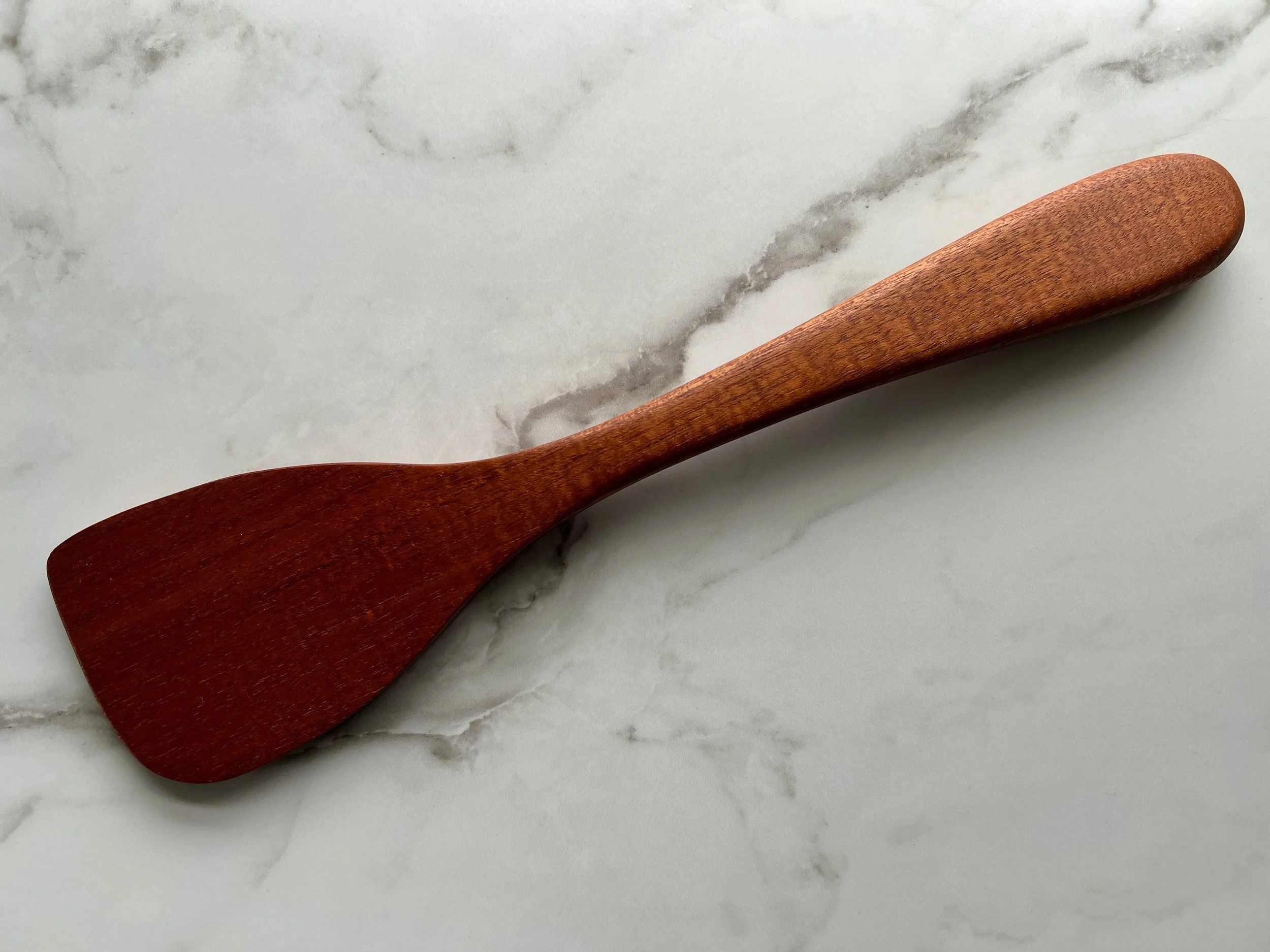
If you cook with non-stick pans, you already know the rule: no metal utensils. Metal scratches non-stick coatings, and once that surface is compromised, the pan's days are numbered. Most cooks turn to silicone or plastic alternatives — but there's a third option that often gets overlooked, and in many ways it's the best one.
Wooden spatulas are among the gentlest tools you can use on non-stick cookware. They won't scratch, won't melt, won't leach anything into your food, and in the hands of an experienced cook, they outperform both silicone and plastic in feel and control. Here's what to look for — and why wood deserves a spot in your non-stick kitchen.
Why Wood Works So Well with Non-Stick Pans
Wood Won't Scratch Non-Stick Coatings
This is the fundamental requirement for any non-stick utensil, and wood meets it easily. A well-finished hardwood spatula glides across PTFE (Teflon), ceramic, and enameled surfaces without leaving a mark. Unlike metal, wood has no hard edges that can catch and gouge a coating. Unlike some plastics, it won't develop sharp burrs over time that can do the same.
Wood Doesn't Melt
Silicone is rated for high heat, but lower-quality silicone spatulas can warp or degrade at sustained high temperatures. Plastic utensils are even more vulnerable — leave one resting against a hot pan and you'll find out quickly. Wood handles heat naturally. A hardwood spatula won't melt, warp from heat exposure, or leave residue in your pan.
Wood Gives You Better Feedback
This is something experienced cooks notice immediately. A wooden spatula transmits the feel of what's happening in the pan in a way that silicone — with its flexible, slightly spongy quality — doesn't. When you're flipping a delicate piece of fish, releasing a fried egg, or working a fond off the bottom of a pan, that tactile feedback matters. Wood feels like an extension of your hand in a way that other materials simply don't.
Wood Is Chemically Inert
Non-stick coatings are already doing a job in your pan — you don't want your utensil adding anything to the equation. Quality hardwoods are flavor-neutral and chemically inert. They won't react with acidic foods, won't leach plasticizers or chemical compounds at high heat, and won't impart any taste or odor to what you're cooking.
What to Look for in a Wooden Spatula for Non-Stick Use
Not every wooden spatula is right for non-stick cookware. Here's what matters:
A Smooth, Well-Finished Edge
The working edge of the spatula — the thin end that makes contact with the pan surface — should be sanded smooth with no rough spots, splinters, or sharp angles. Run your finger along the edge before using any wooden spatula on a non-stick surface. A quality handmade spatula will have a carefully finished edge; a cheaply made one may not.
Thin Enough to Get Under Food
A spatula that's too thick at the working edge is clumsy in a non-stick pan. You want something thin enough to slip cleanly under an egg, a pancake, or a piece of fish without having to force it. The best wooden spatulas for non-stick use taper toward the working edge rather than maintaining a uniform thickness throughout.
The Right Wood
As with any wooden kitchen tool, the species matters. Hard maple and cherry are excellent choices for spatulas — dense enough to hold a thin edge without splintering, smooth enough to finish well, and durable enough to hold up over years of regular use. Avoid softer woods, which can develop rough spots and splinters more readily.
A Comfortable Handle
You'll be maneuvering this tool in a pan, often for extended periods. The handle should feel balanced in your hand — not so long that it's unwieldy, not so short that your hand ends up close to the heat. A well-shaped handle makes a real difference in a tool you use every day.
Appropriate Size and Shape for the Task
Spatulas come in different profiles for different jobs. A wide, flat spatula is ideal for pancakes, eggs, and anything you need to flip in one motion. A narrower profile works better for fish fillets, burgers, and tasks where precision matters more than surface area. A slightly angled or offset spatula makes it easier to get under food without your hand hovering directly over the pan.
Wood vs. Silicone for Non-Stick Cookware
Silicone has become the default non-stick utensil material for many cooks, and it's a reasonable choice. But it has real limitations worth knowing:
Flexibility can work against you. Silicone's flexibility is useful for scraping bowls, but in a pan it can make precise flipping harder. A wooden spatula is rigid, which gives you more control when you need to get cleanly under something.
Silicone doesn't transmit feedback. The slight give in silicone insulates you from the tactile information the pan is sending. With wood, you feel the resistance of the food, the texture of the surface, the moment something is ready to release.
Quality varies enormously. High-quality silicone spatulas perform well. But lower-quality versions can have a slight odor, may discolor over time, and the silicone head can separate from the handle with repeated use and washing. A solid hardwood spatula has no joints to fail.
That said, silicone has one genuine advantage: it's more flexible for tasks like scraping batter from a bowl or working into the corners of a pot. For those jobs, silicone is the better tool. For cooking in a non-stick pan, wood often wins.
Caring for Your Wooden Spatula
The same care principles that apply to wooden spoons apply here:
Hand wash only. The dishwasher will dry out, warp, and eventually crack any wooden utensil. A quick wash with warm soapy water and a rinse is all you need.
Dry promptly. Don't leave your spatula sitting in water or lying on a wet surface. Stand it up or lay it flat where air can circulate.
Oil it regularly. Every few months, condition your wooden spatula with food-grade mineral oil. This keeps the wood from drying out, maintains the smooth surface finish, and extends the life of the tool significantly. (See our full guide to oiling wooden utensils for step-by-step instructions.)
Inspect the edge periodically. The working edge of a spatula takes more wear than most parts of a wooden utensil. If it develops any roughness, a light sanding with 220-grit paper followed by re-oiling will restore it.
The Bottom Line
For non-stick cookware, wooden spatulas offer a combination of gentleness, durability, heat resistance, and tactile feedback that's hard to match. The key is choosing one made from quality hardwood, finished to a smooth edge, and shaped for the tasks you actually cook.
A well-made wooden spatula isn't just safe for non-stick pans — it may quickly become your favorite tool in the kitchen.
At Carved Wooden Spoons, every spatula and utensil is handmade in Brunswick, Maine from sustainably sourced New England hardwoods. Shaped and finished by hand, built for daily use in real kitchens. Shop the collection