
What Makes a Great Wooden Spatula? An Artisans Perspective
Most people don't think much about their spatula until they're using a bad one. Then it's all they can think about — the blade that's too thick to slide under a fish fillet, the handle that feels wrong in the hand, the flex that gives when you need firmness.
I've spent years carving wooden kitchen tools, which means I've also spent a lot of time thinking about what separates a spatula that's genuinely useful from one that just looks nice hanging on a hook. Here's what I've found actually matters.
1. Blade Thickness and Edge Geometry
This is the most important factor, and the one most often compromised in mass-produced spatulas.
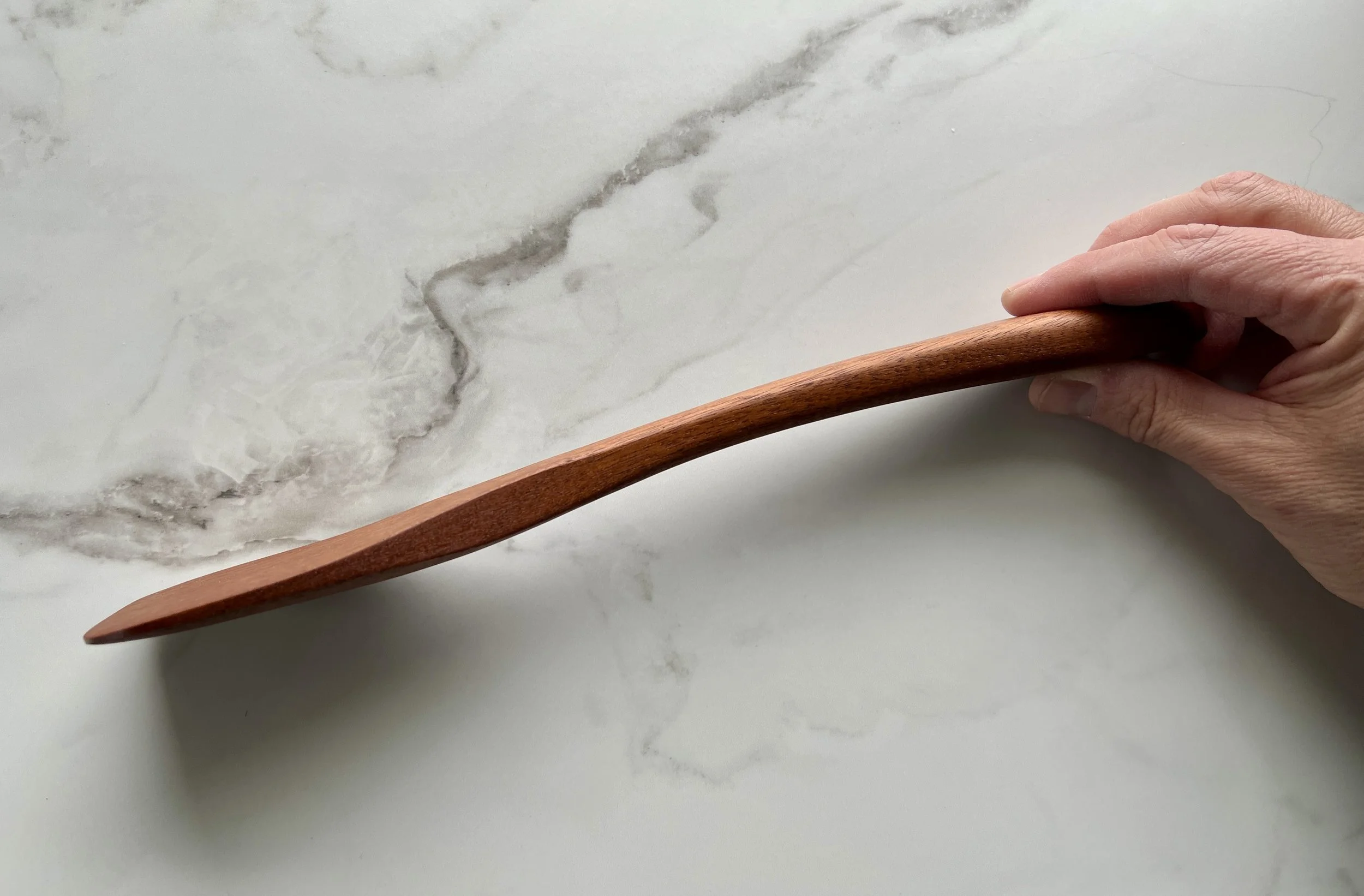
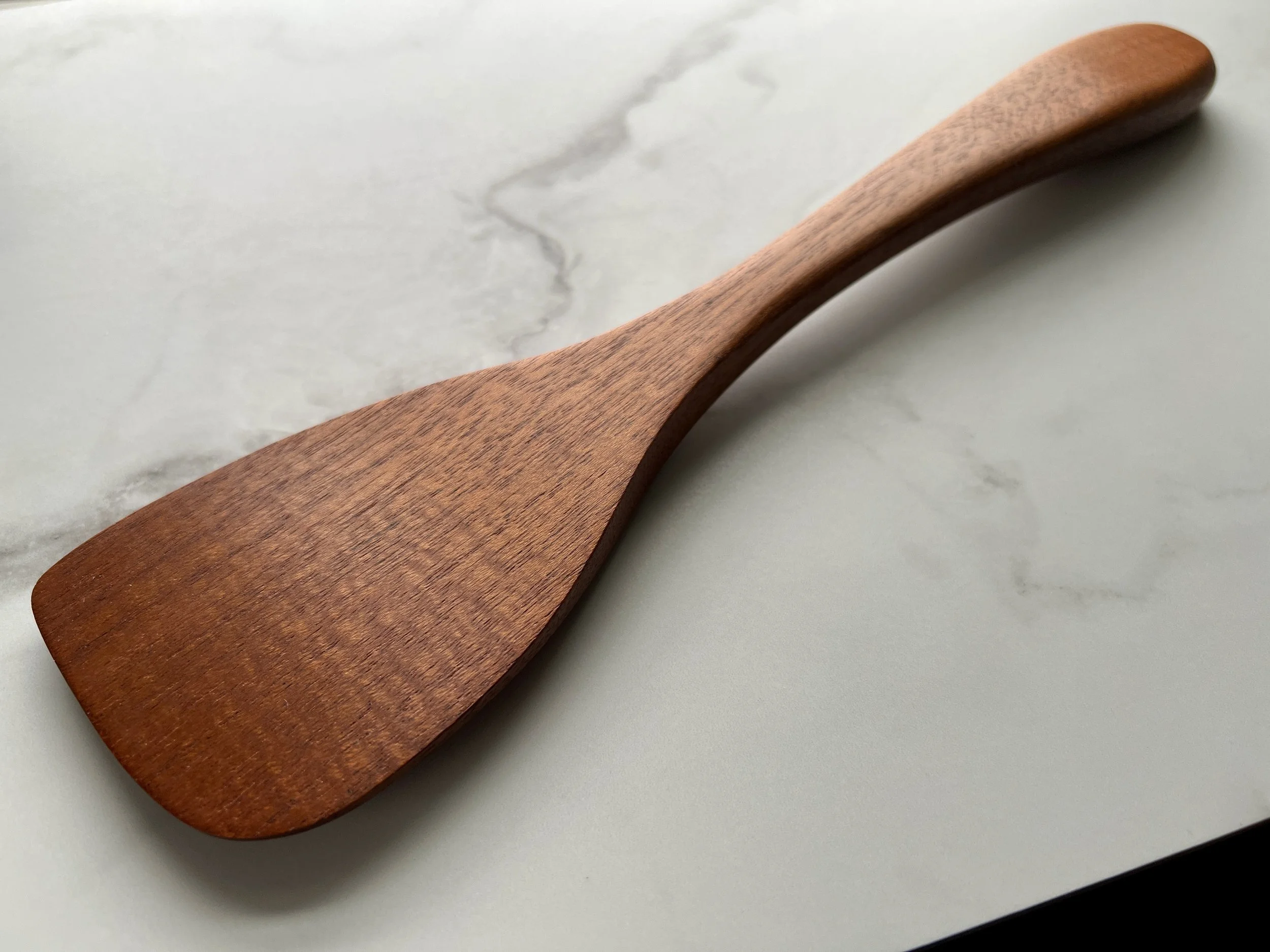
A great wooden spatula has a blade that tapers toward the edge — thin enough to slide cleanly under food without lifting or tearing it, but not so thin it becomes fragile. You want something that can get beneath a delicate egg or a seared piece of fish without disturbing it.
The edge should also be somewhat squared off rather than rounded. A blunt, squared front edge is far more effective at scraping up fond — the browned bits that form on the bottom of a pan during high-heat cooking. Those bits are flavor, and a spatula that can collect them makes better sauces.
2. Blade Width
Width determines what a spatula is good for.
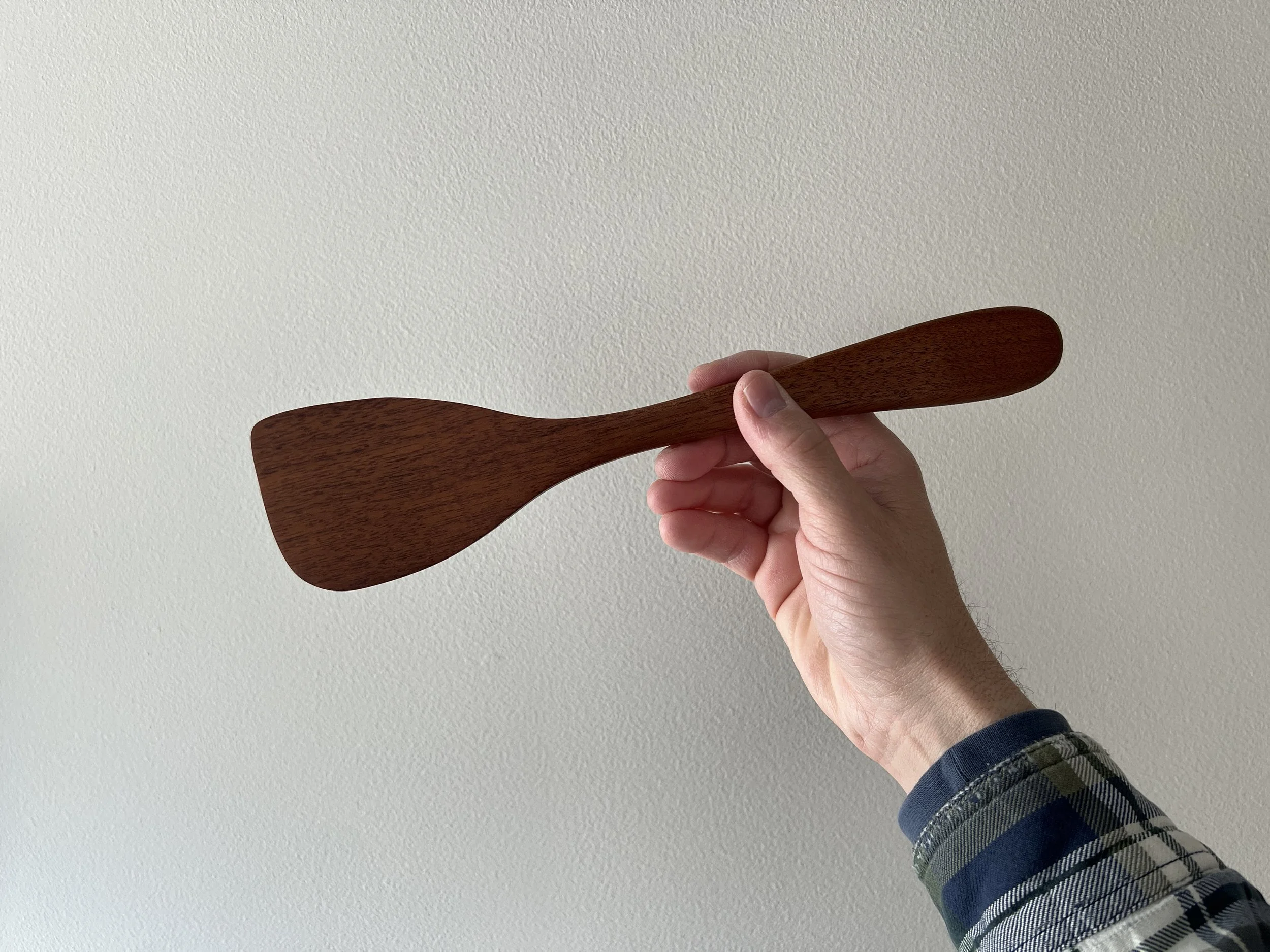
A narrower blade — around 2.5 to 3 inches — is more versatile. It can flip eggs, turn a burger, slide under a piece of salmon, or work in a smaller pan without awkwardness. A wider blade is better suited for serving or working in large pans, but loses maneuverability in tight spaces.
For a single all-purpose wooden spatula, I'd recommend something in the 2.5–3 inch range. That's the design I settled on for the Fantastic Flipper — 3 inches wide, which gives you enough surface to flip with confidence while staying nimble.
3. Handle Shape and Balance
A spatula's handle has one job: to stay comfortable and in control while you work. That sounds simple, but it's where a lot of wooden spatulas fall short.
The handle should be long enough to keep your hand away from the heat — 12 to 13 inches total length is a good benchmark for stovetop use. It should taper slightly so it naturally seats in the hand rather than feeling like a dowel rod. And it should be balanced well enough that the blade doesn't pull the whole tool forward when it's resting in the pan.
Thin is generally better than thick here. A slender handle reduces fatigue during longer cooking sessions and gives you more precise control.
4. Wood Species
The wood itself matters more than most people realize.
Cherry is my personal favorite for spatulas. It's dense and hard enough to hold a sharp edge, machines cleanly to a smooth finish, and develops a beautiful warm color over time with use and oiling. It's also one of the more sustainable domestic hardwoods available in New England.
Maple is another excellent choice — slightly lighter in color, very hard, and tight-grained in a way that resists moisture absorption well. Many cooks prefer the lighter look.
Avoid softwoods. Pine, cedar, and similar soft-grained woods are too porous and too prone to splintering for kitchen use. If a wooden spatula seems unusually cheap, the wood species is usually why.
5. Surface Finish
A wooden spatula should be sanded smooth — genuinely smooth, not just "smooth enough." Rough or uneven surfaces harbor bacteria, catch food, and are unpleasant to hold.
After sanding, a food-safe finish is essential. Natural oils — food-grade mineral oil, walnut oil, or salad bowl oil — penetrate the wood and protect it from moisture without leaving any coating that can chip or peel into food. Avoid spatulas with lacquer, varnish, or polyurethane finishes. Those coatings aren't meant for surfaces that contact food directly, and they tend to crack over time.
6. One Piece of Wood, Not Assembled
The best wooden spatulas are carved or shaped from a single piece of wood — no glue joints, no inserted handles, no dowels connecting blade to handle. Joints are where moisture gets in and where tools eventually fail.
A single-piece spatula is stronger, more hygienic, and more beautiful. The grain runs continuously from tip to end, which is both structurally superior and visually distinctive when the wood is shaped well.
7. Weight — Lighter Than You'd Think
Here's something that surprises people: a great wooden spatula is lighter than it looks. The goal in shaping a hardwood spatula is to remove as much material as possible while maintaining strength — leaving just enough wood where it matters. The result is a tool that feels substantial but not heavy, easy to maneuver for extended periods without fatigue.
If you pick up a wooden spatula and it feels like a paddle, it's probably over-built. Good shaping makes a real difference.
Putting It Together
A great wooden spatula has a thin, tapered blade with a squared edge, a comfortable long handle, good balance, is made from a dense hardwood like cherry or maple, finished with food-safe oil, carved from a single piece, and lighter than you'd expect. That's a short list, but most mass-produced tools compromise on at least half of it.
The difference between a spatula that meets all those criteria and one that doesn't isn't subtle. You'll notice it the first time you use it — and every time after that.
Jason Weymouth hand-carves wooden spatulas and kitchen utensils in Brunswick, Maine from sustainably sourced cherry and maple hardwood. Every piece is finished with food-safe oil and shaped for daily use. Shop wooden spatulas →